
Loading
We design and build fast, beautiful and reliable mobile apps for Android and iOS — from single-platform products to cross-platform Flutter apps ready for both stores.
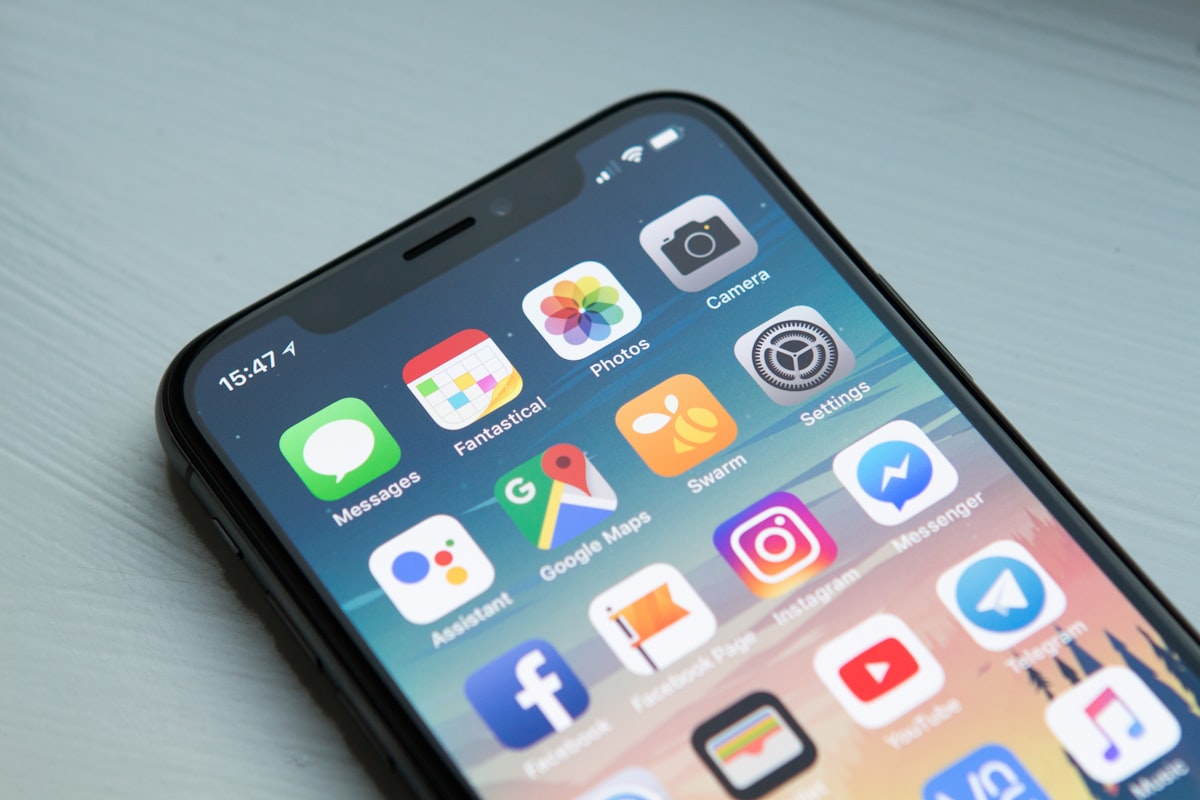
From idea to App Store, we build mobile products people love to use. Whether you need a native Android or iOS app, or a single Flutter codebase that runs on both, our team delivers pixel-perfect UI, smooth performance and rock-solid architecture.
We integrate the services your app needs — Firebase, secure REST APIs, payment gateways and push notifications — and handle the full journey through to Play Store and App Store deployment and maintenance.
A complete set of solutions delivered by a team that sweats the details.
High-performance native Android apps built with Kotlin and Java.
Elegant, fast iOS apps built with Swift for iPhone and iPad.
One codebase, both platforms — faster delivery with native feel.
Reach every user with shared, maintainable cross-platform code.
Auth, realtime database, cloud functions and analytics wired in.
Connect your app to any backend with secure, efficient APIs.
Stripe, PayPal and local gateways for in-app payments.
Timely, targeted notifications that keep users engaged.
Full App Store and Play Store submission and release management.
A proven, transparent process from first idea to launch and beyond.
We map your goals, users and scope to define a clear, actionable roadmap.
Wireframes and interactive prototypes validate the experience before we build.
Agile sprints turn the design into clean, tested and production-ready code.
Functional, performance and security testing on real devices and browsers.
Smooth release to your servers, app stores or the cloud with zero downtime.
Ongoing monitoring, updates and enhancements keep everything running.
We've delivered results across a wide range of sectors and business sizes.
Experienced people, secure solutions and a commitment to doing it right.
Senior engineers and designers with years of hands-on delivery across industries.
Security best practices, encrypted data and role-based access baked into every build.
Clean, modular architecture that grows painlessly as your business scales.
Transparent milestones and agile sprints keep your project on schedule.
Regular demos, shared boards and a single point of contact from day one.
Post-launch maintenance and support plans so you are never left stranded.
Most of the cost and nearly all of the risk in a mobile project sits outside the screens people imagine. Here is the part of the work that is invisible in a design file.
When a client describes an app, they describe screens. When we estimate one, roughly half the effort lands somewhere the client never pictured: the backend that stores the data, the API the app talks to, and the admin panel someone uses every day to manage users, fix bad records, refund an order and re-send a failed notification.
That admin panel is the single most under-scoped item in mobile projects. It is typically 20–30% of the build, it appears in almost no brief, and without it your operations team ends up asking a developer to run database queries by hand. If a quote for a two-platform app with accounts and payments contains no admin panel line, the quote is not cheaper — it is smaller.
Apple reviews every build by hand and rejects for things that have nothing to do with your code. In our experience the recurring causes are: an account-deletion path that does not exist inside the app, sign-in required before the user can see any value, a privacy policy URL that returns an error, missing or inaccurate data-collection disclosures, screenshots showing features the build does not have, and any payment for digital content that bypasses in-app purchase. Google's review is lighter but enforces its own target-SDK deadlines annually, and an app that misses one simply stops being updatable until it is raised.
Practically this means two things for your plan. Budget three to five days for submission, review and the near-certain first rejection. And get the developer accounts opened early, in your own company's name — an app published under a vendor's Apple account cannot be transferred without their cooperation, which is the most common way businesses end up locked to an agency.
"Should it work offline?" sounds like a question for engineers. It is not. Answering it properly means deciding what happens when two people edit the same record on two phones with no connection, and which one wins when they reconnect. That is a business rule, and it needs an owner.
The cheap version — cache what was last fetched so the app shows something useful and clearly says it is stale — covers most consumer apps and costs a few days. Full offline write support with a sync queue and conflict resolution is a genuinely different product, and it is the right call for field-work apps where staff are in basements, warehouses or rural areas. Deciding this in week one is cheap; discovering it in month three means reworking your data layer.
Push is usually named as a headline feature and then under-used. Worth knowing before you plan around it: on iOS the user must grant permission, and if they decline you cannot ask again from inside the app — so when you ask matters enormously. Asking on first launch, before the user understands the value, is how apps end up with a permanently unreachable audience. Delivery is also best-effort; notifications are not a reliable transport for anything critical, so anything that must arrive needs a backup channel and an in-app inbox.
Android adds its own layer: aggressive battery optimisation on many manufacturer skins will delay or drop background delivery, and behaviour differs between brands. If notification timing is central to your product, that needs testing on actual devices from the brands your users own, not on an emulator.
Testing on a recent iPhone and a flagship Android tells you very little about how your app performs for real users, particularly in Pakistan and comparable markets. The devices that expose problems are mid-range Android phones with 3–4GB of RAM, a crowded storage partition and a poor mobile connection. That is where you discover the images are too large, the list rebuilds on every scroll, the app cold-starts slowly and the sign-up form is unusable because the keyboard covers the submit button.
We keep a small set of real devices for exactly this reason and we test on them before every release. It is unglamorous and it catches more real-world issues than any amount of simulator work.
Every few megabytes matters more than teams expect. Users on limited storage and metered data abandon large downloads, and the effect is strongest in precisely the markets where growth is cheapest. We keep release builds lean by shipping per-architecture bundles, compressing and right-sizing image assets, dropping unused fonts and icon sets, and removing dependencies pulled in for a single helper function. It is worth an afternoon before launch.
Once your app is installed on real phones, you no longer control which version people run. Someone will still be on the build from fourteen months ago, calling an API endpoint you want to change.
So we build two things into the first release, because retrofitting them is painful: a minimum supported version check that can politely block a dangerously old build and send the user to the store, and versioned API endpoints so the backend can evolve without breaking installed apps. Neither takes long. Both save a genuinely bad week later.
Crash and error reporting goes in from the first internal build, not after release — you cannot fix what you cannot see, and the first week of real usage is your densest source of information. From there we track crash-free session rate, cold start time on low-end devices, the drop-off point in your sign-up funnel, and API error rates by endpoint. Those four numbers tell you almost everything about whether the app is healthy.
If you are still choosing a framework, our comparison of Flutter and React Native sets out the decision tree we use, including the cases where the honest answer is native. For budgeting, the phase-by-phase breakdown in what software development actually costs uses a two-platform app with payments as its worked example.